Water Atlas 2025
Rising levels of greenhouse gases in the atmosphere warm the oceans, melt icecaps and make extreme weather such as droughts and floods more frequent. Those most severely affected are least able to protect themselves.

Global warming affects the water cycle, with far-reaching consequences. Rising global temperatures cause the oceans to warm. This changes how water circulates, thereby affecting the exchange of heat, and causes the Greenland and Antarctic ice sheets to melt faster than ever.
Dense deep water is an indispensable driver of temperature exchange in the oceans. As the ice melts, smaller quantities of dense, cold water are formed and sink into the depths. That disrupts the natural circulation and negatively affects heat flow at the ocean’s surface. The water near the surface is warmed more strongly, causing sea levels to rise because warm water takes up more space than cold. This warming also accelerates the melting of glaciers and ice caps.
Air currents are also affected by global warming. Wind systems and the paths of storms shift, and precipitation patterns change. Weather patterns may increase in intensity. If the surface temperatures of the oceans rise, the warmer air can take up more moisture. Each degree Celsius of warming increases the air's capacity to absorb moisture by 7 percent.
This greater absorption of moisture favours weather extremes and may lead to local dry spells as well as heavy rainfall. Attribution research, which studies the effect of human-caused climate change on extreme weather events, has found that the climate crisis has increased the probability of heavy rain by a factor of 1.2 to 9. If high amounts of rain falls on parched soils, water runs off the surface rather than sinking in. That may result in flooding further downstream.
The climate crisis has an especially profound impact on the water balance in countries of the Global South: Changing rainfall patterns lead to more frequent and intense droughts as well as floods, which in turn undermine the availability of water resources. These shifts threaten the water supply for households, agriculture, and industry, while also increase the risk of conflict over scarce water resources. In Kenya between 1995 and 2019, for example, the proportion of humans living under water stress rose from 15 percent to 33 percent. Wealthy countries in the Global North are also increasingly affected. In the United States, California shows where the trend can lead: in many places, groundwater levels have already fallen by more than 30 metres, and thousands of wells have dried up.
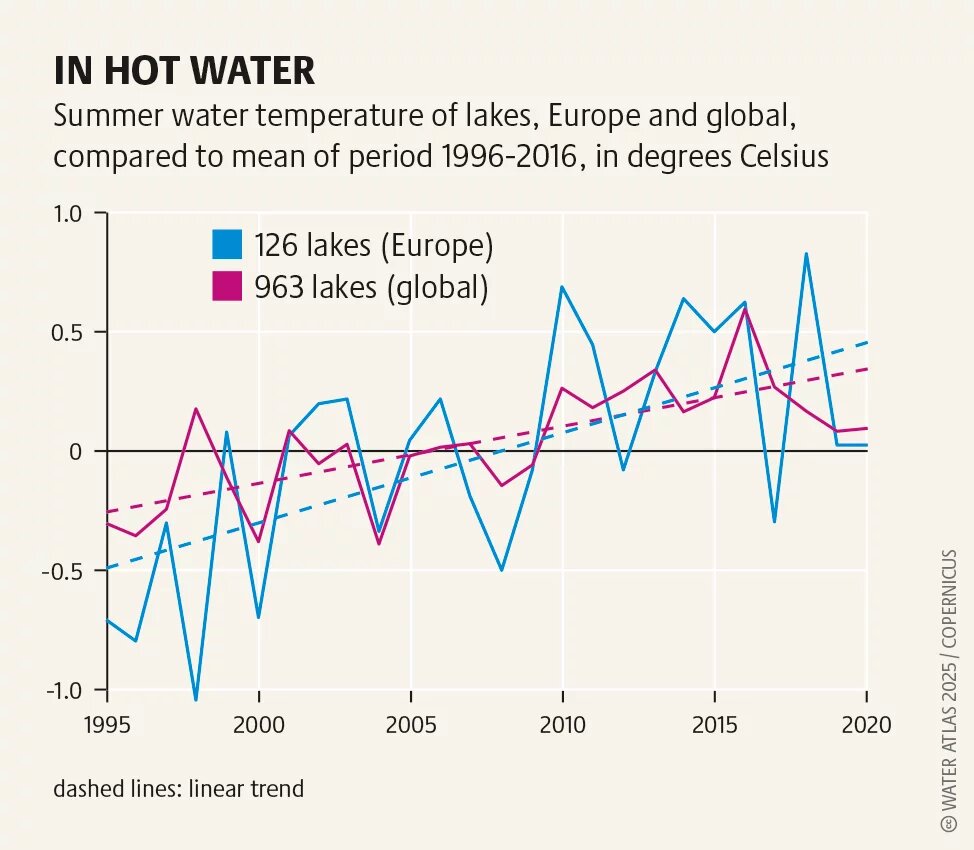
The climate crisis not only reduces the quantity of water available; it also affects its quality. Rising temperatures and water shortages in summer favour the growth of dangerous microorganisms such as blue-green algae and vibrios. Oxygen levels in the water also fall, and the dilution effect for harmful substances such as nitrates in the water is reduced.
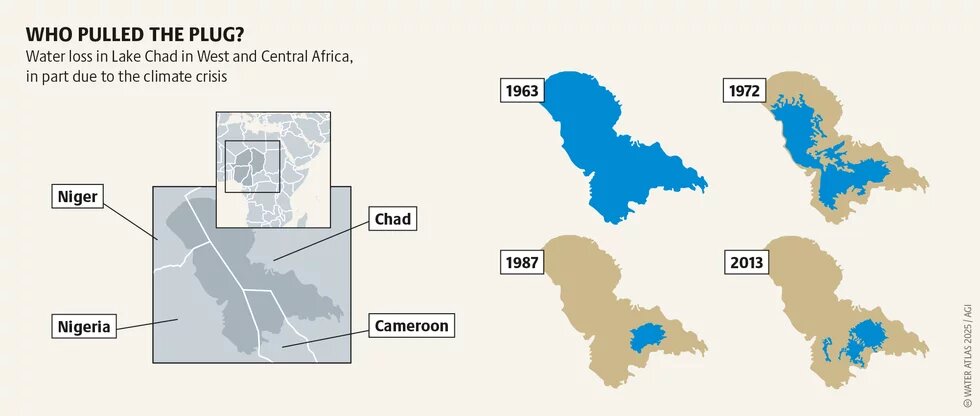
The global climate crisis mainly affects those who have contributed least to it and who are least able to protect themselves: low-income countries, as well as the poor in high-income countries. The demand for drinking water is supplied mainly by groundwater, but the uncontrolled rise in water consumption leads to land subsidence. Jakarta is an example: the Indonesian capital is sinking by over 20 centimetres per year. Large parts of the city are already below sea level. As a result, large quantities of seawater seep into the groundwater layers, making many wells unusable. In mountainous regions too, water is becoming scarcer because of urban growth and the climate crisis, for example on the western slopes of the Andes. Shrinking glaciers and higher evaporation rates are reducing the usable water resources. Over-extraction and longer dry periods lower the volumes of lakes and rivers. That causes declines in fish stocks and the loss of livelihoods for fisherfolk and their families. These impacts increase political tensions, amplify vulnerability, and often force people to migrate, creating additional social and economic challenges. Urgent, coordinated global action is needed to improve water management and climate adaptation in order to protect vulnerable communities and ecosystems.